
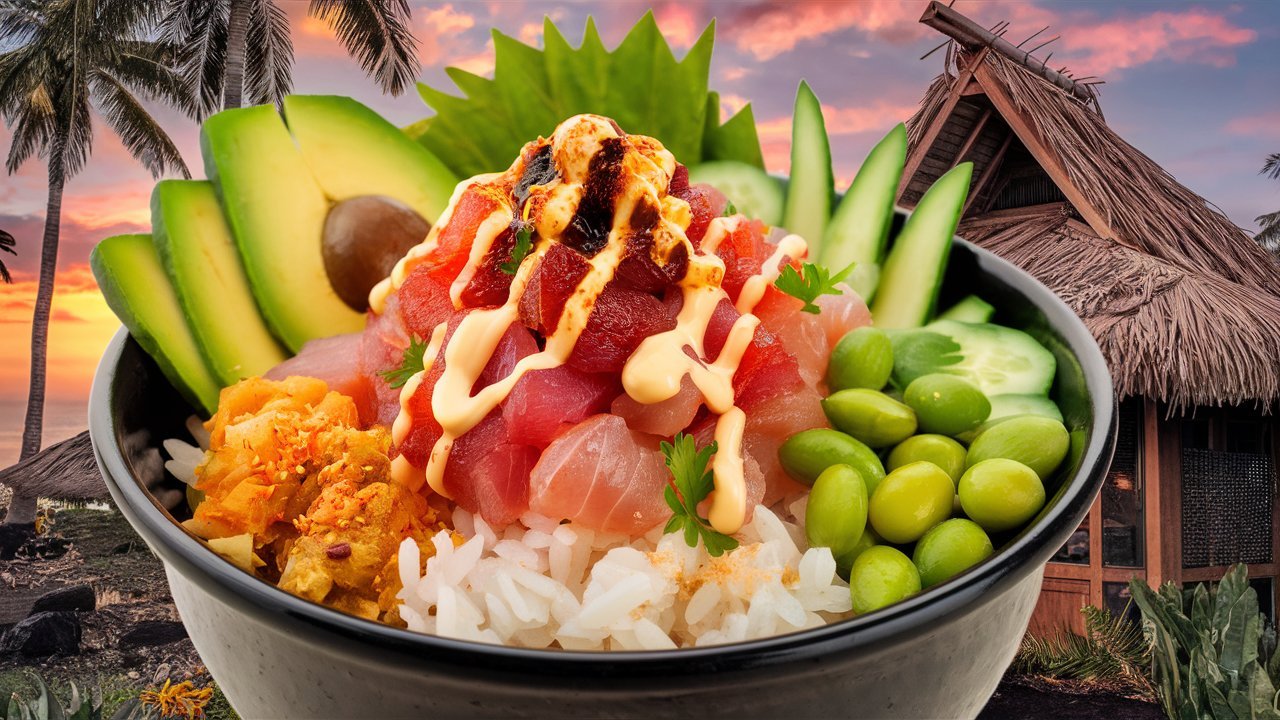
The poke bowl is one of the fastest-growing food trends in the world, loved for its fresh ingredients, bold flavors, and customizable nature. What started as a simple local dish in Hawaii has now become a global favorite featured in restaurants, food trucks, and home kitchens across continents. From its vibrant presentation to its impressive nutritional profile, the poke bowl represents a perfect balance between taste, health, and creativity. Whether you are encountering this dish for the first time or searching for a deeper understanding of what makes it so popular, this guide will walk you through everything you need to know about poke bowls, including their origins, ingredients, health benefits, and why they continue to dominate modern food culture.
✅ What Is a Poke Bowl?
A poke bowl is a complete meal served in a single bowl, built around a base of rice or greens and topped with marinated proteins, fresh vegetables, sauces, and crunchy textures. The word “poke” traditionally refers to diced or sliced raw fish, which is the heart of the original recipe. Over time, however, the poke bowl evolved into a highly customizable meal that now includes cooked proteins, vegetarian options, and fusion flavors influenced by Japanese, Korean, and Western cuisines. The beauty of a poke bowl lies in its flexibility—every bowl can be unique, reflecting personal taste, dietary needs, and creative flair.
✅ The Hawaiian Origins of the Poke Bowl
Long before poke bowls became an Instagram-famous dish, poke existed as a simple fisherman’s meal in Hawaii. Local fishermen would season freshly caught fish with sea salt, seaweed, and crushed nuts, creating a quick and nourishing meal. As Asian immigration influenced Hawaiian cuisine, ingredients like soy sauce and sesame oil were introduced, transforming the flavor profile. When the dish was eventually paired with rice and served in a bowl format, it became the modern poke bowl that spread rapidly across the mainland United States and beyond. Today, the dish represents a blend of tradition, innovation, and global culinary exchange.
✅ Popular Poke Bowl Ingredients Explained
The foundation of any poke bowl begins with a base, most commonly steamed white rice, brown rice, or increasingly popular cauliflower rice for low-carb diets. On top of this base sits the protein, which may include raw fish, grilled chicken, tofu, shrimp, or even plant-based alternatives. Fresh vegetables such as cucumber, avocado, carrot, cabbage, and edamame add crunch, color, and fiber, while sauces like teriyaki, spicy mayo, sesame dressing, or ponzu bring richness and flavor depth. The final layer of toppings—such as sesame seeds, crispy onions, seaweed salad, or pickled ginger—adds texture and aroma, completing the sensory experience of the bowl.
✅ Are Poke Bowls Healthy?
From a nutritional perspective, poke bowls are among the most balanced fast-casual meals available. They combine lean protein for muscle health, complex carbohydrates for sustained energy, and healthy fats for brain and heart function. Raw fish, when used safely, is rich in omega-3 fatty acids, which support cardiovascular health. Vegetables supply essential vitamins, minerals, and antioxidants, while the choice of brown rice or greens can further improve fiber intake. However, the health value depends heavily on portion size and sauce selection, as creamy sauces and excessive toppings can significantly increase calorie and sodium content.
✅ Poke Bowl vs Sushi: What’s the Difference?
Although both dishes share similar ingredients, poke bowls and sushi differ in structure, presentation, and eating style. Sushi is typically served in compact rolls or individual pieces, carefully shaped and portioned for quick consumption. Poke bowls, on the other hand, are served as a full meal in a single bowl, allowing diners to customize every bite with different ingredient combinations. While sushi emphasizes precision and traditional technique, poke bowls focus on personalization, freshness, and casual dining convenience.
✅ Why Poke Bowls Became a Global Food Trend
The worldwide popularity of poke bowls is driven by three powerful factors: health consciousness, customization culture, and visual appeal. Modern consumers want meals that are nutritious, quick, and tailored to their personal preferences, and poke bowls deliver all three. The bright colors and neatly arranged ingredients also make the dish highly shareable on social platforms, turning every bowl into a marketing image. In addition, the ability to adapt poke bowls to vegan, gluten-free, keto, and high-protein diets makes them accessible to a wide range of eaters.
✅ Making a Poke Bowl at Home
Preparing a poke bowl at home is both simple and rewarding. It starts with cooking the chosen base and preparing fresh toppings while keeping ingredient quality high. The protein is marinated briefly to enhance flavor without overpowering its natural taste. Everything is then layered thoughtfully in a bowl to create visual balance and texture contrast. Home preparation allows complete control over nutrition, portion size, and flavor intensity, making poke bowls an ideal meal for families, students, and health-focused individuals.
✅ Conclusion
The poke bowl is far more than a food trend—it is a reflection of how modern eating habits blend tradition, nutrition, and creativity into one customizable meal. From its humble Hawaiian origins to its global restaurant presence, the poke bowl continues to evolve while maintaining its core identity of freshness and balance. Whether enjoyed at a restaurant or prepared at home, this dish offers endless possibilities for flavor, health, and visual enjoyment. As food trends shift toward personalization and wellness, the poke bowl stands as a perfect example of how comfort and nutrition can coexist in a single bowl.
✅ Frequently Asked Questions (FAQ)
❓ What is a poke bowl made of?
A poke bowl typically includes a base (rice or greens), a protein (fish, chicken, tofu), fresh vegetables, sauces, and crunchy toppings.
❓ Are poke bowls good for weight loss?
Yes, when portion sizes are controlled and low-fat sauces are used, poke bowls can be an excellent weight-friendly meal.
❓ Is it safe to eat raw fish in a poke bowl?
When sourced from reputable suppliers and handled properly, raw fish intended for consumption is safe.
❓ Can vegetarians eat poke bowls?
Absolutely. Many poke bowls use tofu, tempeh, or vegetables as protein alternatives.
❓ What makes poke bowls different from sushi?
Poke bowls are served as a full customizable meal in a bowl, while sushi is served in bite-sized rolls or pieces.
